


Ultrasound Diagnosis of Cubital Tunnel Syndrome
PM&R News • June 2018
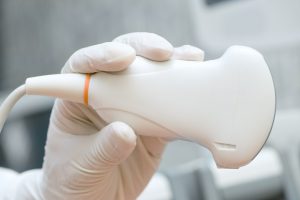
Diagnosing cubital tunnel can be challenging, as often patients may have prominent symptoms but do not meet electrodiagnostic criteria. A recent meta analysis, evaluated how well ultrasound can diagnose cubital tunnel, a technique that could supplement or potentially replace electrodiagnostic testing. 14 trials were used comparing the ulnar nerve cross sectional area at different site in individuals with and without cubital tunnel syndrome. The largest difference between symptomatic and non-symptomatic patients was found to be at the medial epicondyle. Ulnar nerve measurements of patients without cubital tunnel syndrome reached a peak of 7.4 mm2 when evaluating at the following sites: arm level, cubital tunnel inlet, medial epicondyle, cubital tunnel outlet, and the forearm. When using 10mm2 as a diagnostic cutoff, sensitivities were 85%, specificities were 91%, and odds ratio were 53.96. Some studies suggest sensitivity of electrodiagnostics for cubital tunnel syndrome is near 78% and specificity is 95% or more. Due to a similar specificity and stronger sensitivity, ultrasound could become the new electromyography for cubital tunnel syndrome.
Review Question
Does ulnar inching on electrodiagnostics matter?Answer
It can depend on your surgical colleagues practice. Some surgeons like to know the exact location of pathology to ensure release occurs at that location, while others transpose the entire segment.
