


How can we improve swallowing in the patient with hemiparesis?
PM&R News • February 2019
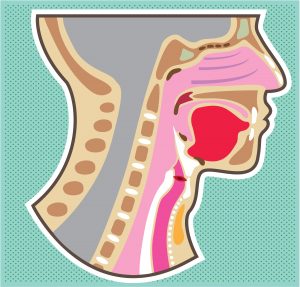
A study on the effects of cerebrovascular accident (CVA) related to cervical alignment and its effects on dysphagia has recently been published in the European Journal of Physical and Rehabilitation Medicine. The study wanted to analyze if the use of cervical isometric exercises could improve dysphagia in those who had recently been affected by hemiparesis.
In order to compare the experimental and control groups radiographs were taken in an upright position pre and post-testing along with a deglutition study to evaluate swallowing.
Participants:
- 70 dysphagic patients with hemiparesis
- Age: 52±15 years
- Experimental group: 37 participants (none lost at follow-up)
- Control group: 33 participants (none lost at follow-up)
- Inclusion criteria: Minimum of 1 severe symptom of the validated in Greek Ohkuma questionnaire
- Exclusion criteria:
- Barthel Index > 20
- Hemispheric stroke scale (Motor function) < 25
- Cervical spine immobilization
- PMH: oropharyngeal dysphagia, prior cervical spine abnormalities and/or surgery, Mini Mental Status examination (Greek version) </= 9
The participants were placed randomly in a control group (speech therapy + seated balance exercises) or experimental group (speech therapy + cervical isometric strengthening exercises). Speech therapy was completed for 30 minutes daily in the inpatient rehabilitation setting. The experimental group completed isometrics in all 4 cervical directions: flexion, extension, right lateral sidebend, left lateral sidebend for 10 minutes 3x/day. Initially exercises were completed in supine and seated positions; however, after 2 weeks all exercises were completed in a seated position.
Observations:
- major abnormal cervical posture (scoliosis-kyphosis-hyperlordosis): 46 patients
- convex curvatures to the hemiplegic side: 97%
- Hyperlordosis: 11%
- Kyphotic cervical deformity: 19%
- Coronal plane curve >10*(scoliosis): 19%
At admission and discharge (12 weeks apart) each participant was evaluated on the following:
- oropharyngeal dysphagia (exam completed at bedside)
- water swallow test via videofluoroscopic swallowing study (VFSS)
- pulse oximetry test
- cervical auscultation.
Results showed the experimental group exhibited improved cervical spinal curve (P<0.001) and deglutition (P0.05), upgrading 1 level at VFSS scale, compared to the control group. However coronal, change of coronal, and change of sagittal cobb angles had very good power (0.89-0.99), while the sagittal cobb angle exhibited poor power.
Thoughts?
Incorporating cervical isometric exercises into a formal or home exercise program is a safe and easy way to improve spinal alignment and swallowing in those affected by cerebrovascular accidents.
Check out the full article here.
Reference: Ploumis A, Papadopoulou SL, Theodorou SJ, Exarchakos G, Givissis P, Beris A. Cervical isometric exercises improve dysphagia and cervical spine malalignment following stroke with hemiparesis: a randomized controlled trial. Eur J Phys Rehabil Med 2018;54:845-52. DOI: 10.23736/S1973-9087.17.04952-8
Review Question
Dysphagia affects what percentage of CVA survivors?Answer
Dysphagia affects approximately 50% of those impacted by a CVA.
